

About us

About GoldiloxBio
Better models lead to better decisions

GoldiloxBio was founded to address a persistent problem in drug development: the models used to evaluate new therapies often fail to predict how those therapies will behave in people.
Traditional animal studies can be slow, expensive, and limited by important differences between species. Simplified in vitro assays may be scalable, but they often measure only one component of a much more complex biological response.
Drug developers are frequently left choosing between models that are practical but biologically limited and models that are more sophisticated but too costly, variable, or difficult to scale.
GoldiloxBio is built a better solution. We operate in the Goldilox Zone of biologic relevance vs. throughput, ease of use, and reproducibility.
Our Mission
To develop & deploy in vitro models that generate efficient, actionable, and translatable insights for the development of therapeutics.
GoldiloxBio develops human cardiac models designed to provide meaningful functional insights before drug candidates enter clinical trials.
Our goal is not simply to make laboratory models more complex. It is to identify the biological features that matter most, recreate them in a controlled and scalable system, and generate results that help researchers make better development decisions.
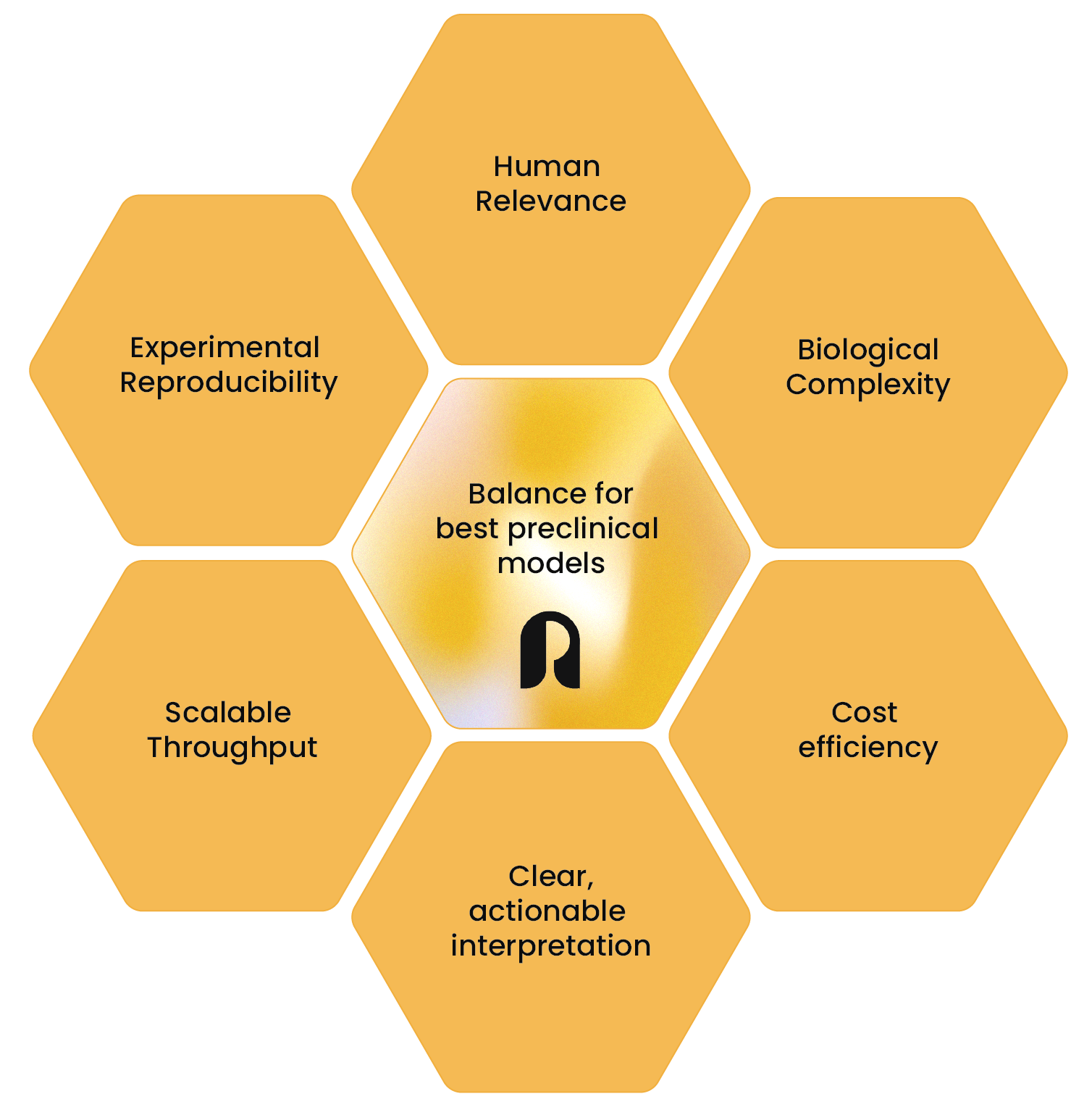
We believe the best preclinical models should balance:
Human relevance
Experimental reproducibility
Biological complexity
Scalable throughput
Cost efficiency
Clear, actionable interpretation

Our point of view
Cell culture is more than cells and media
Most cell-culture systems focus primarily on the cells being studied and treat the environment surrounding those cells as a passive support.
We believe this overlooks a fundamental component of human biology. In the body, cells exist within a complex extracellular matrix that provides structural, biochemical, and mechanical signals. These signals influence how cells attach, organize, mature, communicate, and respond to drugs.
GoldiloxBio considers the extracellular matrix to be a core component of model design—not an afterthought. By combining human induced pluripotent stem cell-derived cardiomyocytes with biologically informed extracellular matrices, we aim to reproduce cardiac behaviors that conventional cell-culture systems may fail to capture.
Human cardiac function cannot be fully understood through a single ion channel, biomarker, or experimental endpoint.
A drug may affect multiple cellular pathways at once. Some effects may increase risk, while others may offset that risk. A result that appears concerning in an isolated assay may behave differently when evaluated within an integrated human cardiac system.
GoldiloxBio combines functional optical mapping with automated analysis to measure cardiac activity across multiple parameters simultaneously.
Our platform is being developed to help researchers understand not only whether a compound produces an effect, but:
What type of effect is occurring
How that effect changes with dose
Whether the response is stable or arrhythmic
How electrical signals propagate through cardiac cells
Whether different biological backgrounds respond differently
Whether an observed response is likely to be meaningful for development
From biological
complexity to actionable insight
GoldiloxBio is led by scientists and engineers with experience in extracellular matrix biology, stem cell-derived cardiac models, electrophysiology, translational research, intellectual property, and biotechnology commercialization.
The company is also supported by scientific advisors with expertise in clinical cardiology, stem cell biology, cardiac electrophysiology, and artificial intelligence applications in bioscience.
Together, we are working to turn advanced human biology into practical tools for drug development.
Built by Scientists Focused on Translation
Better biology should produce better answers
GoldiloxBio is building cardiac models that reflect more of the biology that determines how drugs behave in people—without losing sight of the reproducibility, throughput, and interpretability required for real development programs.